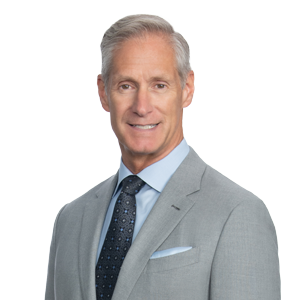
Womble Bond Dickinson Partners Andrew Averbach and Tom Dougherty were guests on the October 7, 2026 edition of “The Federal Drive with Terry Gerton.” The episode focused on what the Nuclear Regulatory Commission’s new radiation protection proposal means for operators, advanced reactor developers, and the NRC itself.
Few regulatory concepts are as embedded in nuclear operations as ALARA, the requirement that radiation exposure be kept “as low as reasonably achievable.” The NRC has now proposed eliminating that standard while keeping existing dose limits in place. The public comment period has closed.
Key takeaways included:
The problem is subjectivity, not the dose limits. Dougherty explained that the challenge lies in how ALARA has been applied over the decades. Its "reasonably achievable" language lacks an objective measure of when enough is enough, which can lead to over-conservatism and higher compliance costs.
The standard reflects a different technological era. Averbach noted that ALARA was designed when workers measured doses with clipboards, and that today’s monitoring technology builds safety in by design.
Advanced reactor developers have the most to gain. Existing plants have mature radiation protection programs and, as Dougherty noted, the NRC does not expect them to change those programs. New developers, who are starting from scratch, would get a clearer and more flexible framework.
Inspections become more predictable. Averbach described how objective limits would replace a "moving target" with a transparent rulebook and allow inspectors to focus on real physical safety.
Comments fell into three camps. Dougherty outlined the approaches in the thousands of pages of comments: keep and improve ALARA, revisit the dose limits themselves, or take the middle road the NRC has proposed. That middle road keeps the existing limits and replaces open-ended judgments with greater specificity and guidance.
The trade-offs are real. Averbach acknowledged that critics may argue the cost savings are modest and that the rule could invite a legal challenge in federal court.
Both attorneys also placed the proposal within the NRC’s broader direction: more clarity, performance-based and graded approaches, and a risk-informed focus on the hazards that matter most.
This selection will switch the website from presenting information primarily about the United Kingdom to information about the United States. If you would like to switch back, you may use location selection options at the top of the page.
Contact
Although we would like to hear from you, we cannot represent you until we know that doing so will not create a conflict of interest. Also, we cannot treat unsolicited information as confidential. Accordingly, please do not send us any information about any legal matter until we authorize you to do so. To initiate a possible representation, please call one of our lawyers or staff members.
By clicking the “ACCEPT” button, you agree that we may review any information you transmit to us. You recognize that, even if you submit information that you consider confidential in an effort to retain us, our review of that information will not create an obligation on us to keep it confidential and will not preclude us from representing another client directly adverse to you, even in a matter where that information could and will be used against you.
Please click the “ACCEPT” button if you understand and accept the foregoing statement and wish to proceed.